Madhupur National Park
A large sal forest on the red-soil Madhupur tract, home to langurs, birds and Garo villages.
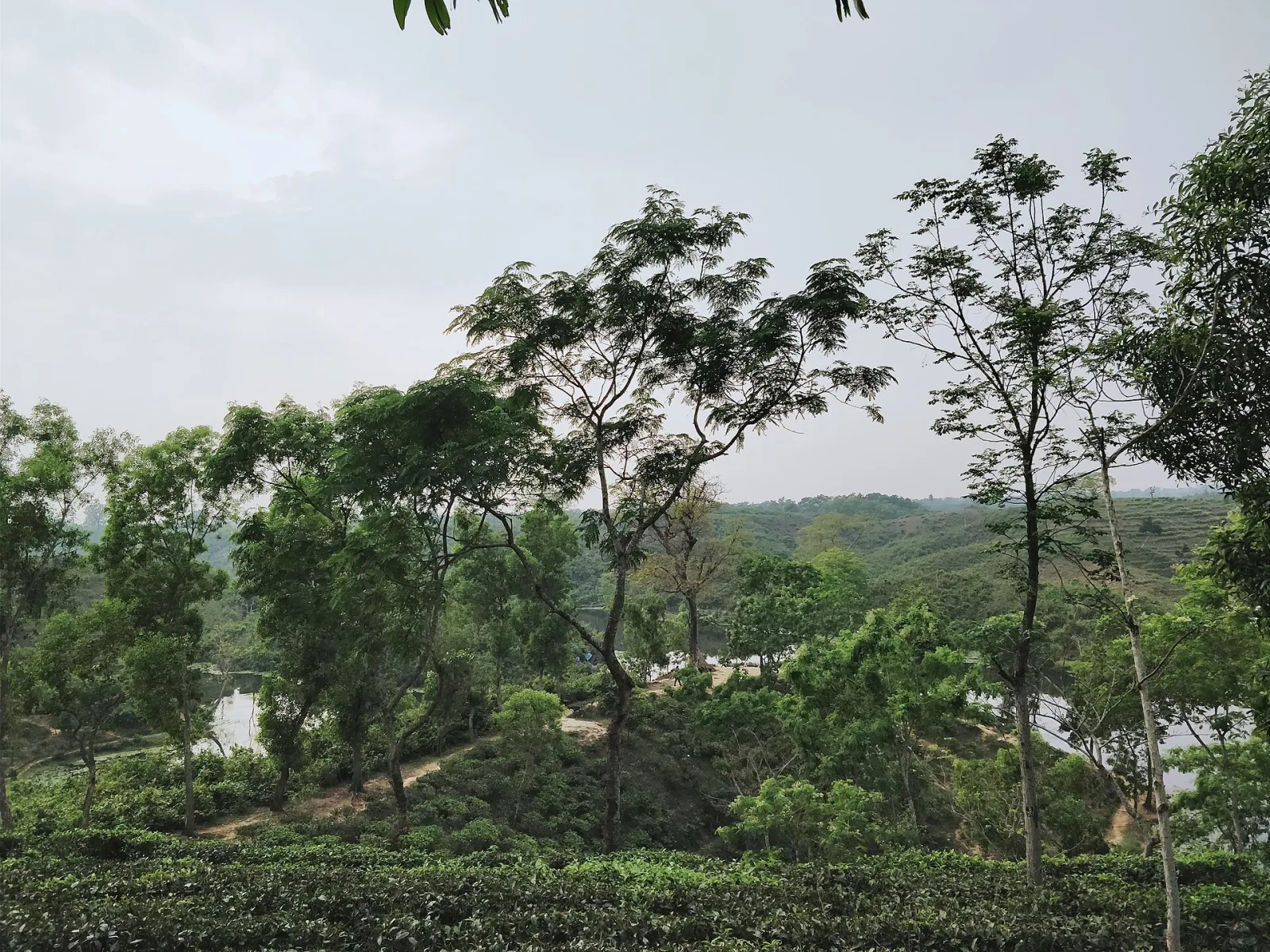
Madhupur National Park, declared in 1982, covers about 8,400 hectares of the Madhupur tract, a raised area of red clay soil where low ridges alternate with shallow valleys. The dominant tree is sal, mixed with other deciduous species.
The forest shelters capped langurs, rhesus macaques, barking deer and many birds, and trails lead from the Rasulpur and Dokhola areas, where there are forest rest houses and a watchtower. Garo and Koch communities live in and around the forest, and the region is famous for its pineapples and jackfruit. Much of the original forest has been lost to plantations, so the protected core is all the more precious.
How to go
From Tangail take a Mymensingh-bound bus to Rasulpur or Jalchhatra (about 1.5 hours, 80-150 BDT), then walk or take a battery auto into the park.
Where to stay
Forest department rest houses at Dokhola and Rasulpur (book through the forest office), or hotels in Madhupur town and Tangail (1,000-4,000 BDT).